
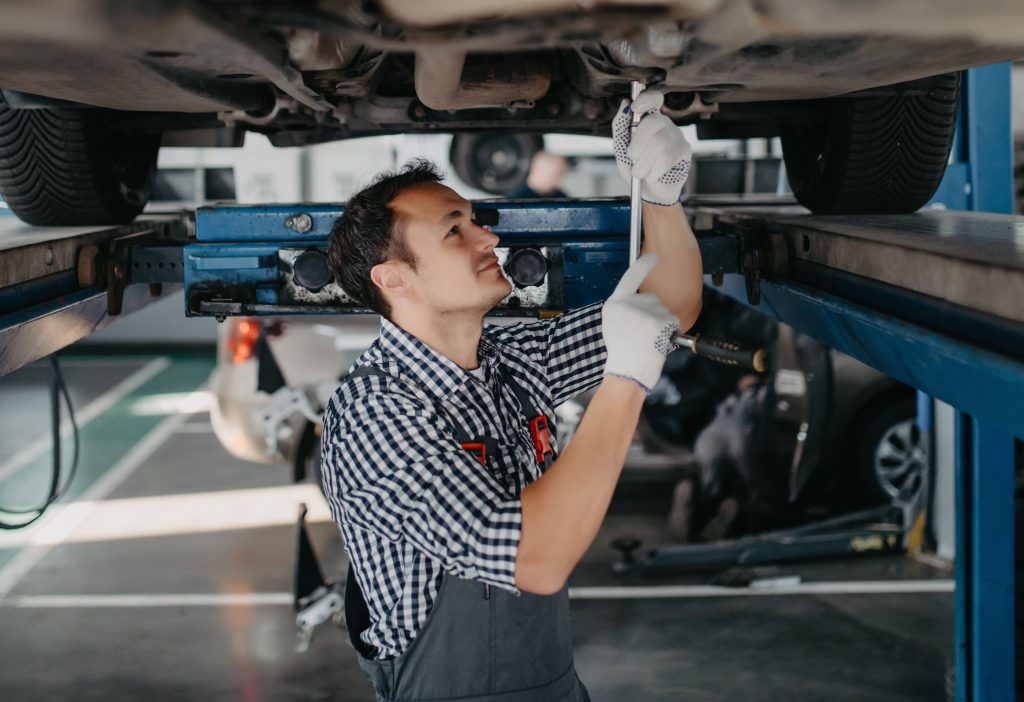
A car fails its MOT when the tester finds a dangerous or major defect. Lights, brakes, tyres, suspension, visibility and emissions are the areas that most often cause a fail, and most of them are easy to spot before you book.
Knowing what fails an MOT takes the worry out of test day. At our MOT test in Newcastle upon Tyne, the tester follows the DVSA standards that apply to every garage in the country. This guide walks through each area in turn, explains how defects are graded, and covers what happens if your car does not pass.
How the Tester Classes a Defect
Every problem the tester finds is placed in a category. According to GOV.UK guidance on MOT test results, major faults and dangerous defects mean your car fails. Minor and advisory items do not.
Category | What it means | Result |
|---|---|---|
Dangerous | A serious risk to road safety. The car is not considered roadworthy until it is repaired. | Fail |
Major | A problem that could affect safety or the environment and needs repair. | Fail |
Minor and advisory | Something to monitor or fix later. | Pass, with notes |
The tester decides the category on the day, so two cars with similar wear can get different results. Any DVSA-approved MOT centre applies the same rules, so you should get a consistent result wherever you go.
Advisories are worth reading, even though they do not fail the car. They tell you what is likely to need attention before next year’s test.
What Fails an MOT: The Most Common Failure Points
If you are wondering what fails an MOT most often, these six areas come up again and again:
Lights and signals
Brakes
Tyres and wheels
Steering and suspension
Visibility, including the windscreen, wipers and mirrors
Exhaust and emissions
These are the usual areas that cause failures, rather than a ranked list with percentages. The sections below look at each one and what the tester checks.
Lights and Signals
The tester checks that your lamps are working correctly, along with the aim of the headlamps and the main beam warning light. The registration plate lights are usually part of the lighting check too.
The usual causes of a fail are blown bulbs and cracked lenses. The fix is often quick and cheap, but only if you spot it before test day.
Ask a friend to stand behind the car while you press the brake pedal to check the brake lights, use the indicators and switch on the fog lights. It takes two minutes and catches most problems.
Brakes
The tester checks the condition, operation and performance of the brakes to make sure they work properly. They also check ABS, electronic stability control and the related warning lights.
Typical reasons for a fail include worn pads or discs, uneven braking from side to side, and a warning light that stays on. If you notice a pull to one side or a spongy pedal, get it looked at before the test. A MOT in Newcastle with repairs on site makes this easy to sort.
Tyres and Wheels
Tyres are checked for condition, security, size, type and tread depth. All four wheels are also checked for security and condition. On vehicles from 2012 onward, the tyre pressure monitoring system is checked too.
The legal minimum tread depth is commonly given as 1.6mm. You can check the official figure on GOV.UK if you want to be certain. Cuts, bulges and uneven wear can also cause a fail, so look at the whole tyre and not only the tread.
If you are unsure about your tyres, see our page on tyres in Newcastle for what we offer.
Steering and Suspension
The tester looks at the condition and operation of the steering and suspension, including oil level and any inappropriate repairs or modifications.
Fails here are often down to worn joints and leaking shock absorbers. Knocking noises over bumps and a car that wanders on the road are common signs. Regular car servicing gives a mechanic the chance to spot worn parts before they become a fail.
Visibility: Windscreen, Wipers and Mirrors
You need a clear view of the road. The wipers and washers must clear the screen, the windscreen is checked for condition and the driver’s view, and the mirrors are checked for number, condition and security.
A split wiper blade or an empty washer bottle is an easy fail to avoid. Top up the fluid and replace tired blades before you arrive.
Seatbelts, Exhaust, Emissions and the Rest
Seatbelts must be present, suitable, in good condition and secure, and they must fit and function properly for the driver. The tester also checks airbag and pretensioner warning lights.
The exhaust system should be secure and complete, with no serious leaks or excessive noise. Emissions must stay within the legal limit, which depends on the age and fuel type of the car. The tester also looks for excessive corrosion or damage in specific areas of the body, and it should not leave sharp edges.
It helps to know what is not tested. The MOT does not cover the condition of the engine, clutch or gearbox. A pass is a snapshot of road safety on the day and not a full health check. You can see the whole list in the car parts checked at an MOT guide on GOV.UK.
What Happens If Your Car Fails Its MOT?
If your car fails, you do not get an MOT test certificate confirming a pass; instead, you get failure paperwork listing the defects. You then repair the car and have it retested. Retest rules depend on timing from the original test: a partial MOT retest is often possible within 10 working days, but after that a full fee may apply. You can also return to the same test centre, and the MOT tester can confirm whether a partial retest applies.
Can you drive your car home if it fails its MOT? You can drive it away only if your existing MOT certificate is still valid, the MOT test result did not record a dangerous fault, and the car remains roadworthy. Otherwise the repairs come first.
The penalties are serious. Driving a vehicle that failed because of a dangerous problem can mean a fine of up to £2,500, a driving ban and 3 penalty points.
If your MOT has already run out, you cannot drive it without a valid MOT, except directly to a pre-booked test or repair appointment, and there is no current MOT certificate covering normal use.
If the vehicle fails, completing the necessary repairs before the expiry date helps you avoid losing the renewal date. Our guide on what to do next covers the steps in detail. When you are ready, book an MOT with Premier Vehicle Care and we will talk you through any defects.
Avoiding a Fail Next Time: Your MOT Checklist
A simple MOT checklist can catch many easy fails. Check your bulbs, tyres, wipers and washer fluid a few days before the test, and book your annual MOT up to a month early if you may need repairs while keeping the same renewal date. Read your last advisories and fix anything that has got worse.
For more tips, read our guide on how to avoid MOT test failures.
Key Takeaways
A dangerous or major defect is a fail; minor and advisory items are not.
Lights, brakes, tyres, suspension and visibility are common fail areas.
The test does not cover engine, clutch or gearbox condition.
You can only drive a failed car away if the old MOT certificate is valid and nothing is dangerous.
Driving with a dangerous defect can mean up to a £2,500 fine, a ban and 3 penalty points.
A quick pre-test check of bulbs, tyres and wipers catches many easy fails.
Frequently Asked Questions
What happens if a car fails an MOT? You receive a refusal certificate listing the defects. You then repair the car and have the car retested, or re tested, often as a partial retest within 10 working days depending on whether you leave the car at the test centre.
Can I drive my car home if it fails MOT? You can only drive it away if you still have a valid MOT certificate and the vehicle is considered roadworthy. If the MOT has expired, you can drive to a pre-arranged test or to a place where it will be repaired. A dangerous defect means the car should not be driven until it is fixed.
What fails an MOT most often? Lights, suspension, brakes, tyres, visibility and the exhaust system are among the most common causes of a failed MOT test or MOT fail. Simple checks of your bulbs, tyres, wipers and washer fluid before the test can prevent many of these.
Ready to Get Your Car Tested?
If you are researching what fails an MOT with a view to getting your car tested, visit our MOT page to see how Premier Vehicle Care approaches it.
Useful Resources
GOV.UK: Driver and Vehicle Standards Agency MOT guidance
You can also check your MOT status online before booking.


